
Domestic · Dry Lining
Dry lining and plasterboarding in Ipswich
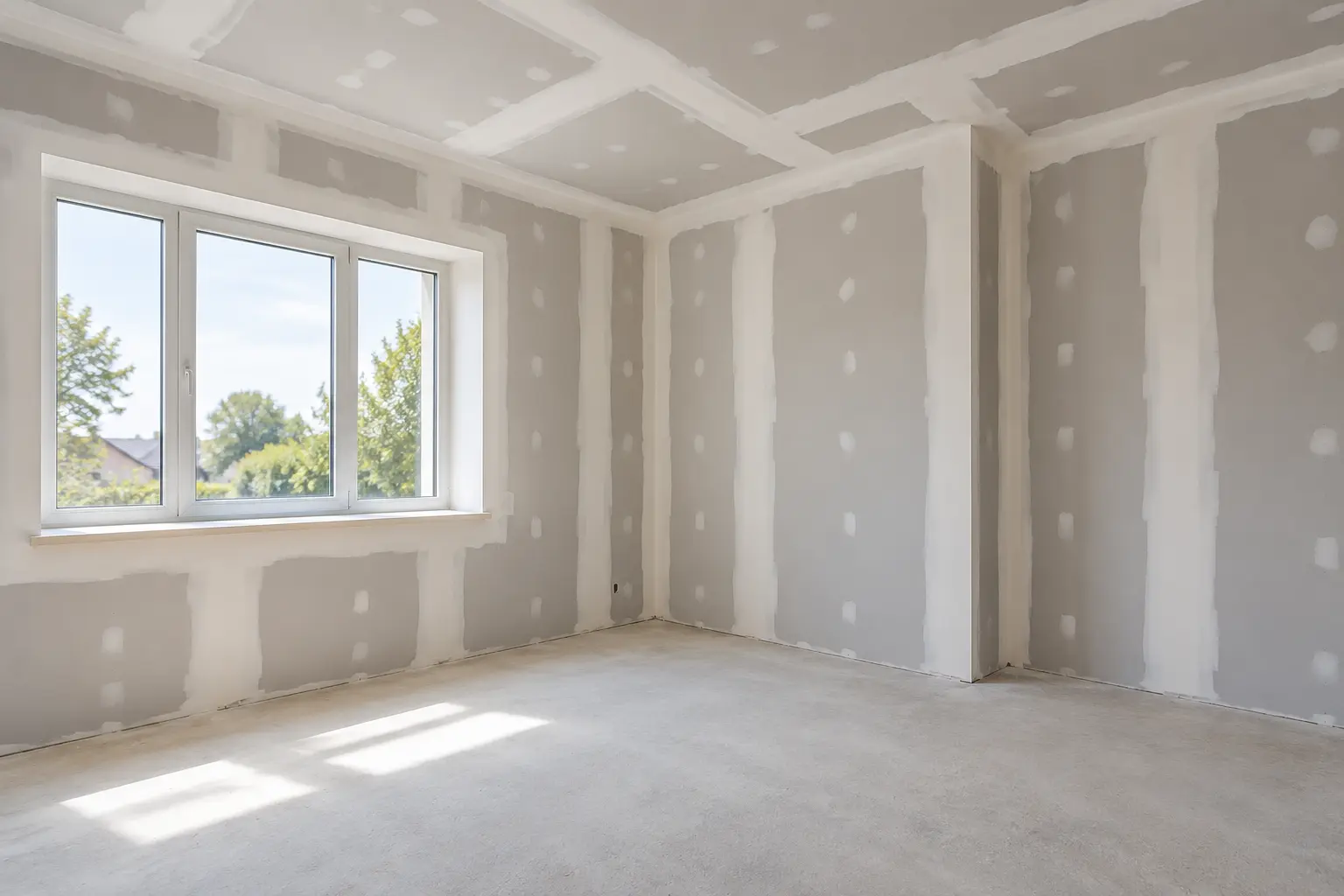
Dry lining is how most new walls and ceilings are built: plasterboard fixed to a frame or straight onto the wall, then taped or skimmed. It’s quick, clean and a good base for a smooth finish. We board extensions, loft rooms and new partition walls for homeowners across Ipswich.
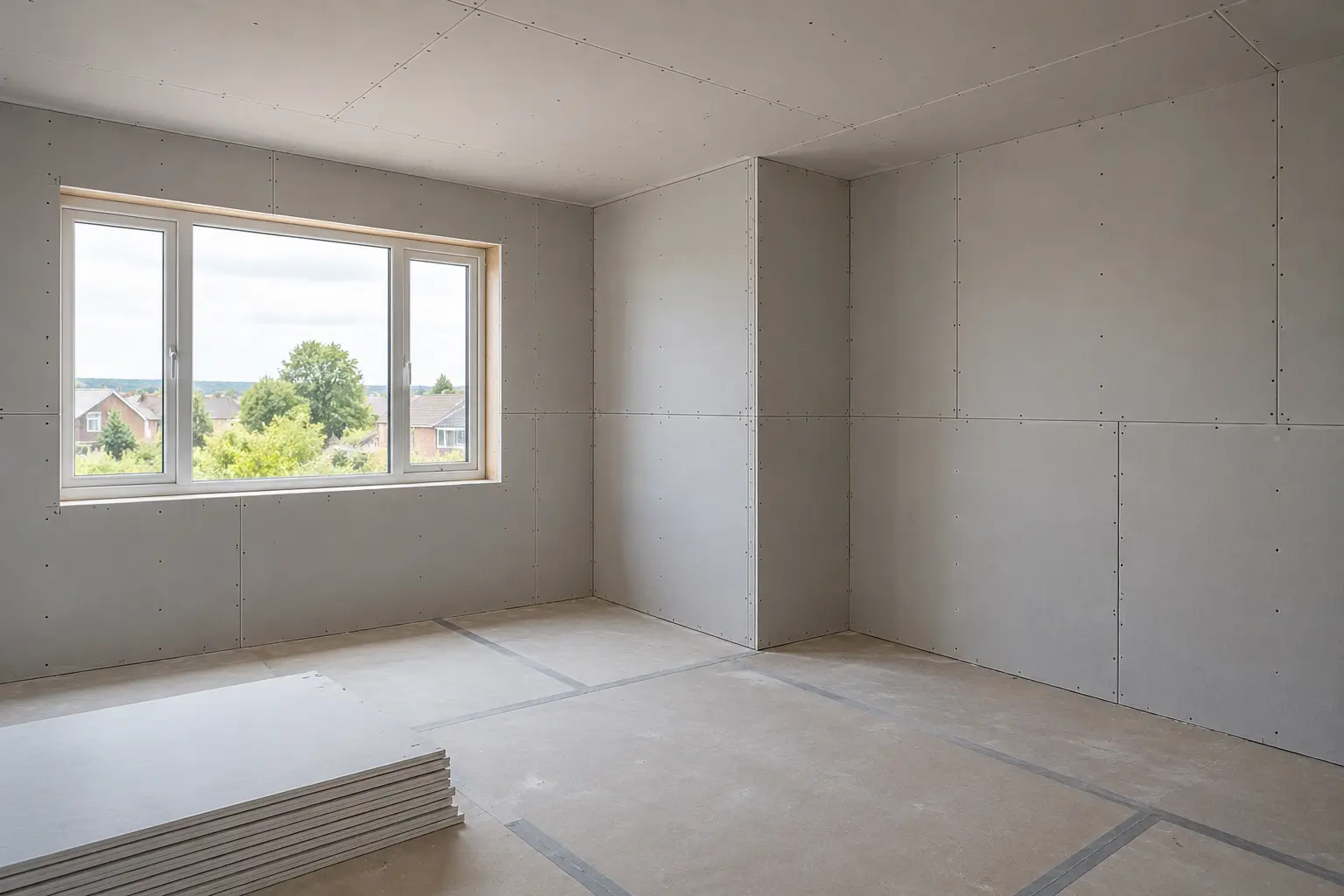
When it’s the right choice
- Splitting one room into two with a new partition
- Loft conversions and extensions
- Uneven or damaged walls you want straightened quickly
- Ceilings that need replacing
- Bathrooms and kitchens needing moisture-resistant board
Boarding methods
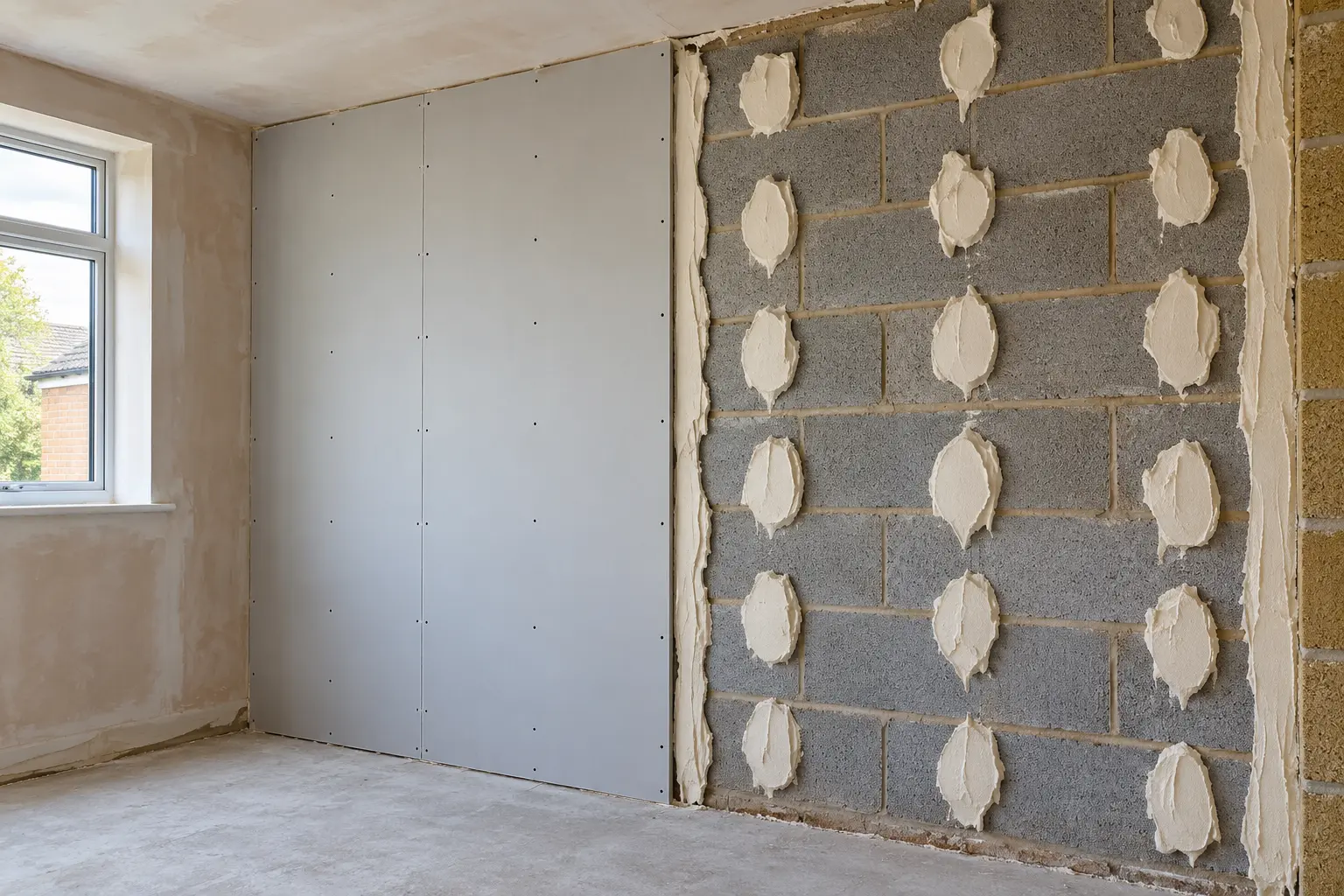
- Dot and dab
- Boards bonded to masonry with dabs of adhesive. Fast and good for straightening walls.
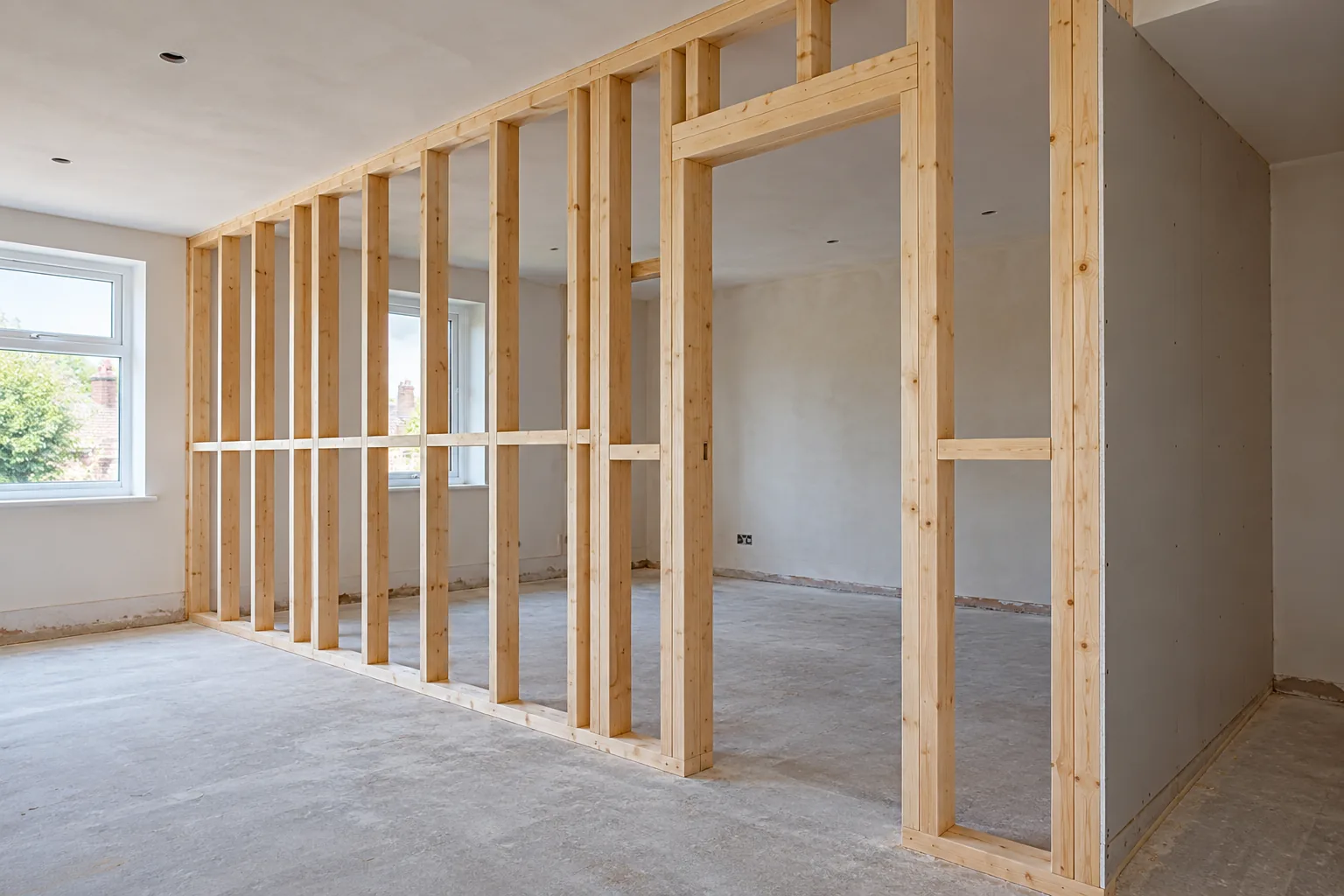
- Stud partitions
- A timber or metal frame boarded on both sides to form a new wall, with insulation inside if wanted.
- Tacking
- Fixing boards to joists or studs with screws, ready for a skim. Used for most ceilings.
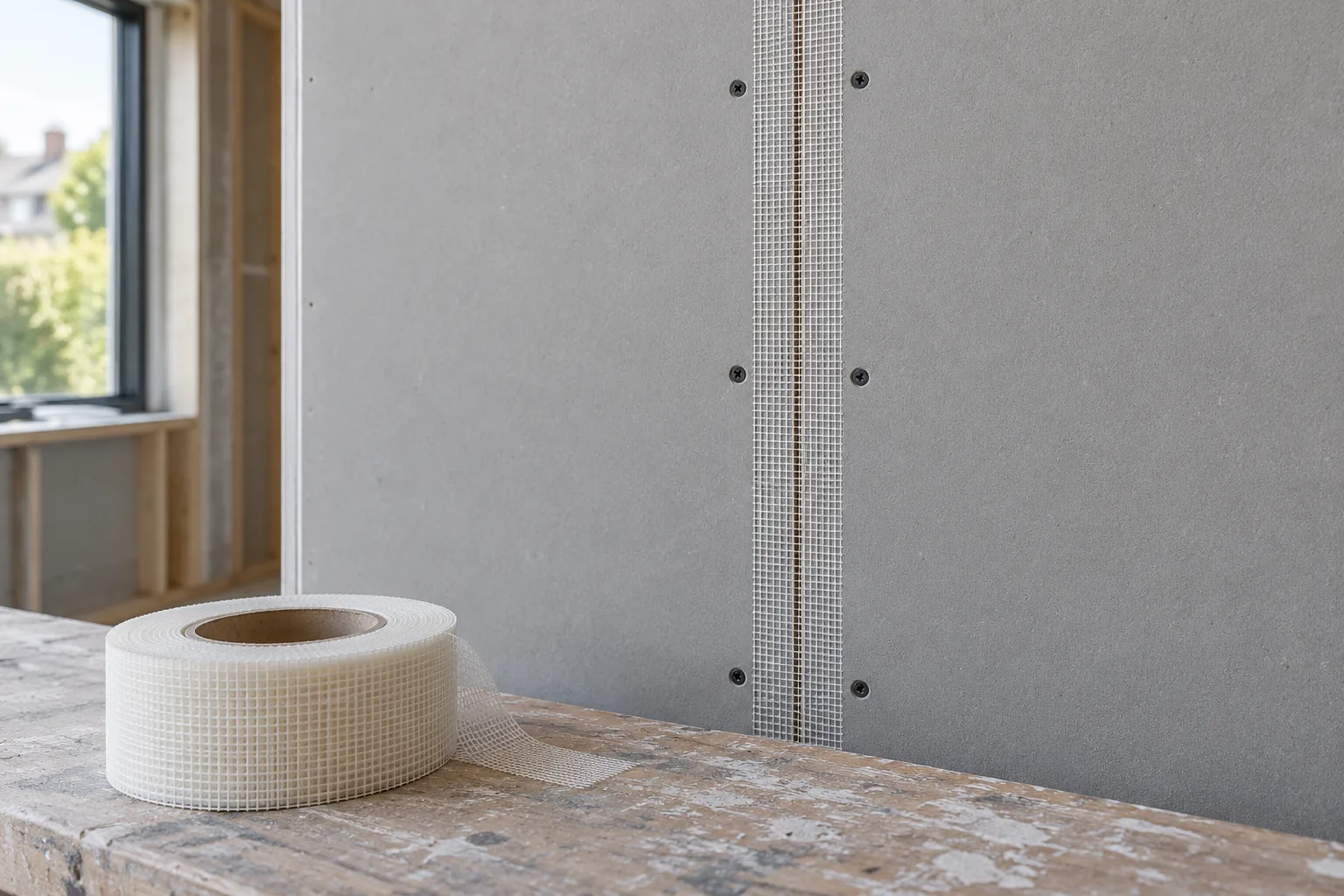
- Tape and joint or skim
- Joints can be taped and filled for a dry finish, or the whole board skimmed with plaster. We’ll advise which suits.
- Specialist boards
- Moisture-resistant, acoustic and fire-rated boards are available. Their performance depends on the complete specified system, not the board alone.
What the work involves
- 1
Measure and plan
We confirm wall and ceiling positions, doorways and where services run.
- 2
Frame or prepare
Studs are built or walls are prepared for bonding.
- 3
Board
Boards are fixed, with cut-outs for sockets and pipes agreed with your other trades.
- 4
Finish
Joints taped and filled, or the boards skimmed ready for decorating.
Want a price for your dry lining?
Photos and rough measurements are a great start.
Things to know
- Coordinate trades
- First-fix electrics and plumbing go in before boarding. We’ll work around your electrician’s schedule.
- Building regulations
- New partitions, fire separation and loft conversions may involve building control. Ask your builder or designer what’s specified.
- What affects the price
- Wall and ceiling area, board type, frame type, insulation and the finish.
- Agree the fixing and finishing requirements
- Tell us where cabinets, radiators, grab rails or heavy fittings will go before walls close up. Board support and reinforcement can then be planned. Fire and acoustic performance comes from the complete specified partition, including joints and penetrations, not a board label alone.
Questions about dry lining
For most rooms, yes. A skim over board gives the same smooth finish you’d get from traditional plastering.
Ask us about your projectOften, but older walls can have moisture issues. We’ll check before recommending it, and lime may suit better.
Ask us about your projectTaping compounds and plaster skim both need the specified drying time before decoration. The products, number of applications and room conditions determine the programme; follow the finishing and paint guidance.
Ask us about your projectAcoustic boards and insulation can reduce noise. How much depends on the whole wall build-up.
Ask us about your projectTaping and jointing finishes the board joints and screw heads; skimming coats the whole board surface. Both can provide a decorating base when properly specified and finished. Board edge type, the lighting, required finish and drying programme influence the choice.
Ask us about your projectNo. Moisture-resistant board is not a universal waterproof lining. Showers, tiled wet areas and persistently humid spaces need the appropriate board, waterproofing and finishing system specified for their use.
Ask us about your projectGet in touch
Tell us about your job using the form, or call or email us. Photos, measurements or drawings help us give a more accurate price.
Quote for domestic dry lining
Tell us what you need. We’ll get in touch to discuss your project.