
Domestic · Internal Wall Insulation (IWI)
Internal wall insulation (IWI) for homes in Ipswich
If a room always feels cold, insulating the inside of the outside walls can make a real difference. We fit insulation to the inside face of the wall and skim it, so you get a warmer room and a finished, paintable wall in one job. The build-up is chosen around how much space you can spare.
When it’s the right choice
- Cold bedrooms or living rooms on external walls
- Solid-walled houses where cavity insulation isn’t possible
- Rooms being stripped back during a renovation anyway
- Single walls rather than the whole house
- Homes where external insulation isn’t wanted or allowed
- Rooms where every centimetre counts
Insulation options
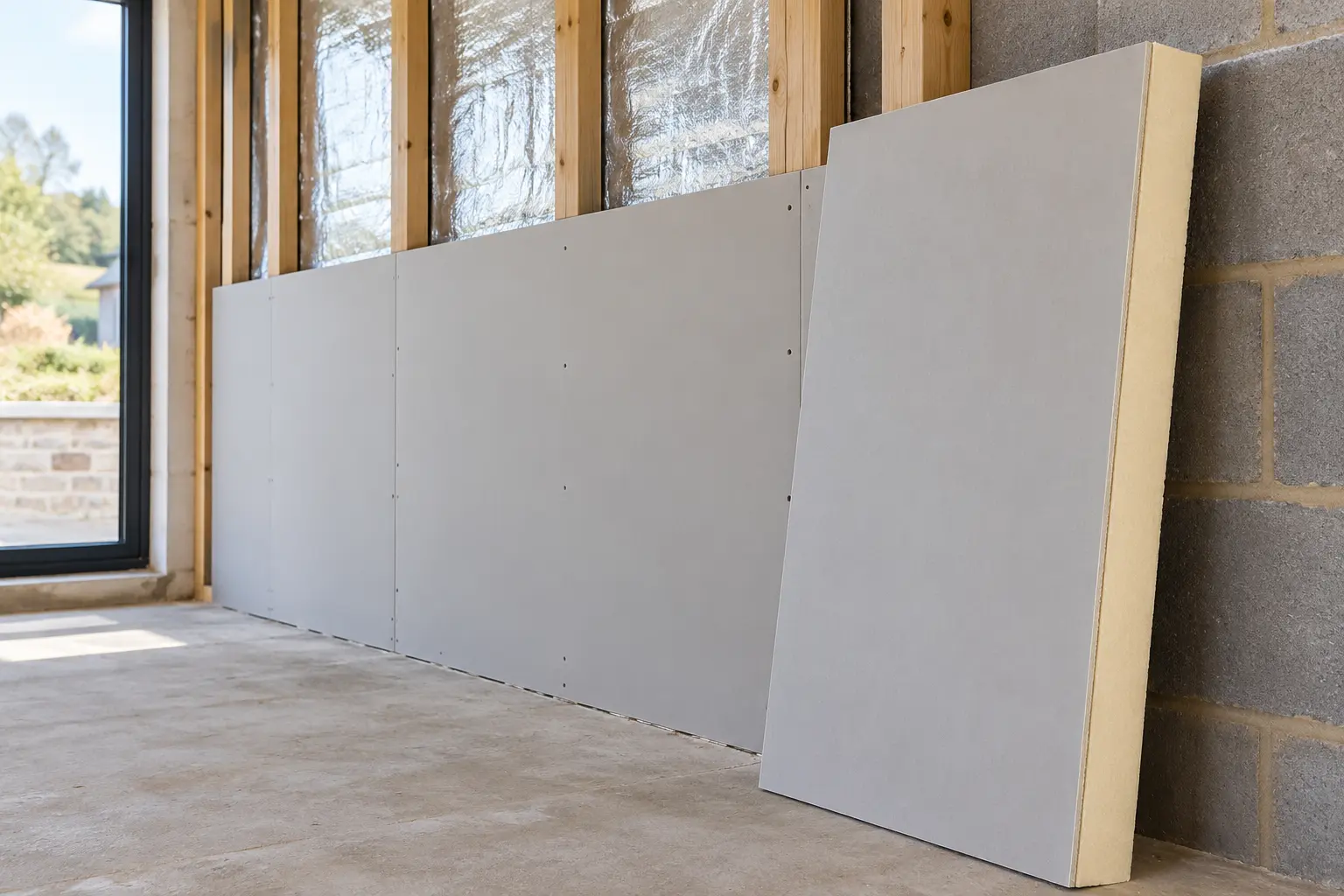
- Insulation backed plasterboard
- Plasterboard with an insulation layer bonded to the back, fixed to the wall and skimmed. The usual choice where you want warmth without much thickness.
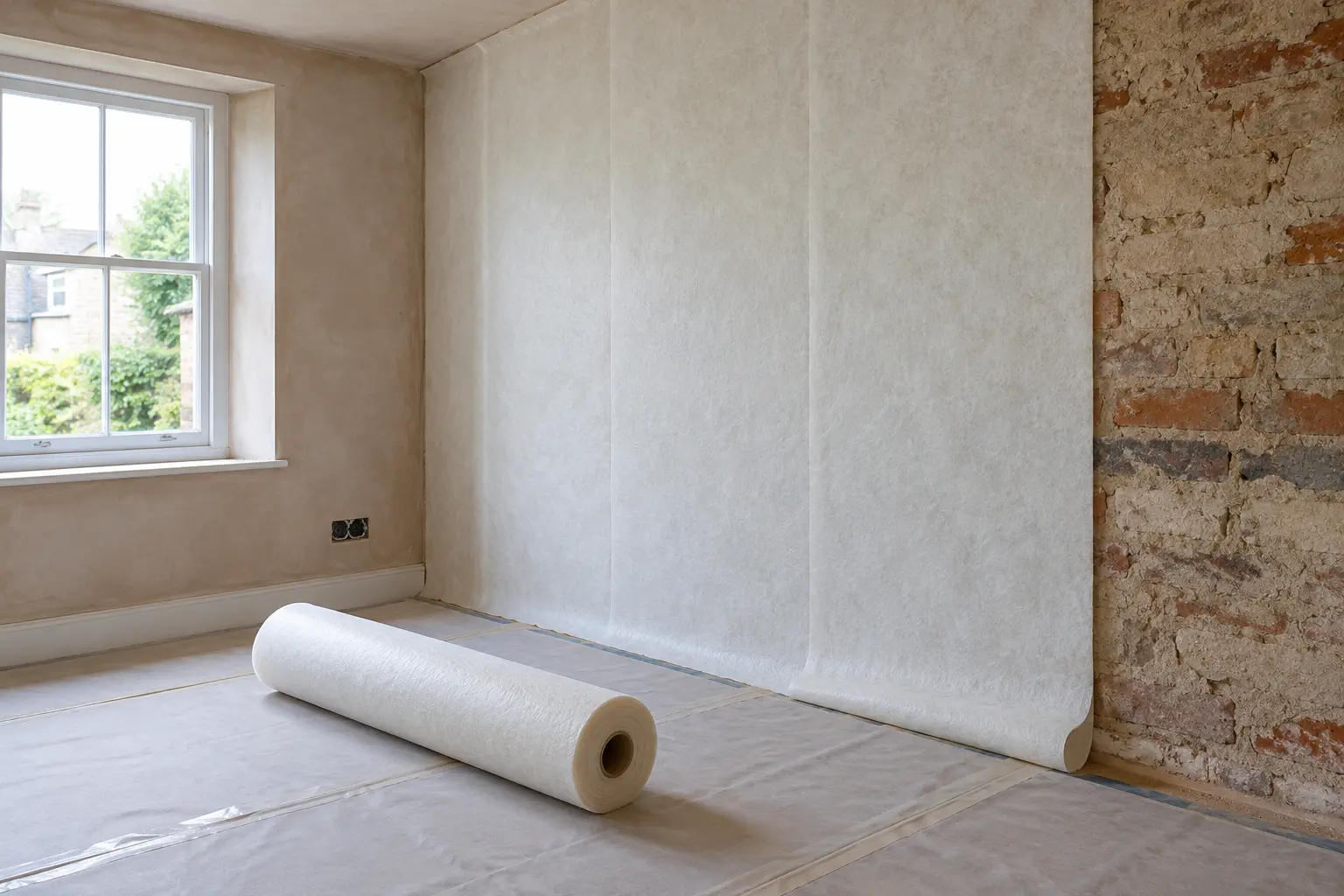
- Thin internal wall insulation (TIWI)
- Ultra-thin membrane or textile rolls, such as Permagard ISO-THERM, for rooms where space is limited. Takes up far less wall than boards.
- Battens and insulation
- A timber or metal frame with insulation between, then boarded and skimmed. Useful where walls are very uneven.
- Acoustic options
- Where noise from next door is the main concern, acoustic boards and insulation can be used. Performance depends on the full build-up.
What the work involves
- 1
Check the wall
We look for damp, ventilation and the wall’s construction before recommending anything.
- 2
Plan the details
Sockets, radiators, window reveals and skirting all move inward. We agree how each will be handled, with your electrician or plumber if needed.
- 3
Fit and finish
Boards are fixed, joints and edges are sealed, and the wall is skimmed ready to decorate.
Want a price for your internal wall insulation (iwi)?
Photos and rough measurements are a great start.
Things to know
- You lose a little room
- Insulation adds thickness to each wall, a few centimetres for insulation backed plasterboard, a lot less for the thin rolls. We’ll show you what that means for your room.
- Moisture and ventilation
- Insulating the inside changes how a wall handles moisture. Existing damp must be sorted first, and rooms need good ventilation.
- Inside or outside?
- Internal insulation suits room-by-room work. If you’d rather keep your room sizes, have a look at external wall insulation (EWI).
- What affects the price
- Wall area, the board type and thickness, and how many sockets, radiators and windows need detailing around.
- Thin insulation and insulated boards do different jobs
- A thin textile lining such as Permagard ISO-THERM uses much less room depth than insulation backed plasterboard, but it is not an equivalent thickness of conventional insulation. Compare the actual product and full wall build-up, rather than assuming the same thermal result. Damp causes and ventilation need assessing first.
Questions about internal wall insulation (iwi)
The result depends on the wall, selected insulation, junction details and the rest of the building. Thin linings and conventional insulated boards provide different levels of performance. We do not promise a temperature increase or saving from a generic description.
Ask us about your projectUsually they need taking off and refitting slightly forward. We can coordinate that with your plumber.
Ask us about your projectYes. Many people start with the coldest room or wall.
Ask us about your projectYes. Thin internal wall insulation (TIWI) uses ultra-thin membrane or textile rolls, such as Permagard ISO-THERM, and takes up far less room than insulated boards.
Ask us about your projectNo. This goes inside the room. External wall insulation goes on the outside of the house and is finished with render.
Ask us about your projectNot automatically. TIWI may suit a space-constrained wall, but thermal performance, moisture behaviour and compliance must be assessed for that particular build-up. Where a target performance is specified, the designer needs to confirm that the chosen system achieves it.
Ask us about your projectInsulation should not be used to conceal an unresolved moisture problem. Leaks, penetrating damp and ventilation issues need investigation. Adding an internal lining changes the wall's temperature and moisture behaviour, so junction and vapour-control details matter.
Ask us about your projectGet in touch
Tell us about your job using the form, or call or email us. Photos, measurements or drawings help us give a more accurate price.
Quote for domestic internal wall insulation (iwi)
Tell us what you need. We’ll get in touch to discuss your project.